
Running again after an ACL reconstruction
Overview
Most people leave hospital with a date in their head. Nine months, sometimes twelve, and the assumption that when the date arrives, the knee will be ready. The graft does need that time to mature, and nobody at this clinic will move that. But the graft is not the only thing that has to be ready, and the date says nothing about the rest.
What we actually test before you run
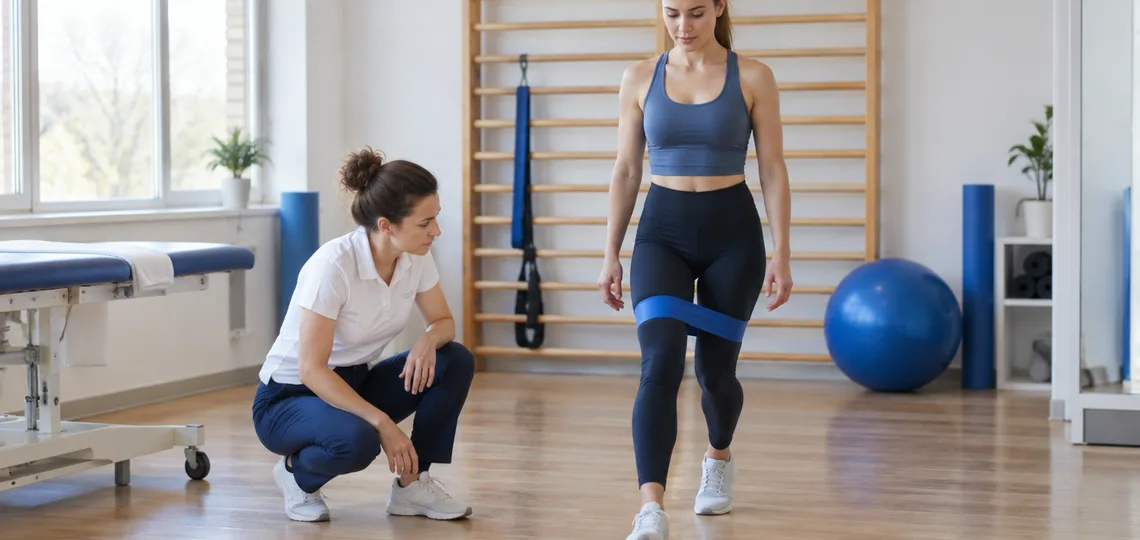
Before anyone on our books runs after an ACL reconstruction, four things have to be true. The knee straightens fully and bends to within a few degrees of the other side. It has no swelling the day after a hard session. The quad on the operated leg produces at least eighty per cent of the strength of the other leg on a measured test, not a guess. And you can hop and land on it without the knee collapsing inwards, which we film and show you.
Why we do not use the calendar
Two patients with the same surgery on the same day can be months apart on those tests. One had a strong quad before the injury and did the early work; one had a swollen knee for six weeks and could not. Running on the calendar rather than the tests is how re-injuries happen, and the re-injury rate in the first two years is the number we are actually trying to change.
What the first run looks like
A walk-run on a treadmill in the gait lab, filmed, with Daniel watching the knee on every landing. Three minutes of running in total on the first day. It is unglamorous on purpose. From there the plan on your phone adds time before it adds speed, and it will not add either while the knee is reacting.
If you are somewhere in this process and unsure whether you are on track, bring your surgeon’s protocol to an assessment and we will test you against it rather than against the date.